top of page


How Parkinson's Impacts Communication
Part 3: Seven Things I've Learned from Working with People with Parkinson's Disease. A Speech Pathologist's Perspective. By Sophie Walsh, Senior Speech Pathologist 6. Cognitive changes and the rhythm of conversation Parkinson’s doesn’t just impact movement, it can also impact cognitive functions like attention, memory, problem-solving, and word-finding. Many people notice they lose track of their thoughts mid-sentence, struggle to find the right word, or need longer to respon
Sep 152 min read


How Parkinson's Impacts Swallowing
Part 2: Seven Things I've Learned from Working with People with Parkinson's Disease. A Speech Pathologist's Perspective. By Sophie Walsh, Senior Speech Pathologist Part 1 explored the impacts of Parkinson's disease on speech, next we will explore swallowing. 3. Swallowing changes often go unnoticed Another change that tends to fly under the radar is difficulty swallowing (dysphagia). Studies show that up to 80% of people with Parkinson’s may experience swallowing difficulties
Sep 53 min read


How Parkinson's Impacts Speech
Part 1: Seven Things I've Learned from Working with People with Parkinson's Disease. A Speech Pathologist's Perspective. By Sophie Walsh, Senior Speech Pathologist Over the years, I’ve had the privilege of working closely with people living with Parkinson’s disease. While every person’s journey is different, some common themes have emerged - some that surprise even the people living with them. These insights are based on real conversations, shared frustrations, unexpected bre
Aug 252 min read


What Is Evidence Based Medicine?
When emPowereD discusses interventions like exercise or levodopa, we often use the phrases “evidence-based” or “the evidence shows”. But what does that actually mean? Medicine and other evidence-based health care domains (e.g. Allied Health) are what's known to be evidence-based practices. That means decisions about tests, medications, and treatments aren't based on opinion or tradition, they're built on evidence gathered carefully over time, using the scientific method. How
Aug 182 min read


What is Atypical Parkinson's? Is it the same as PD?
You might hear the term “atypical Parkinson’s” or “Parkinson-plus syndrome” used to describe a group of movement disorders that share some features with Parkinson’s disease. They tend to progress differently, and they don’t usually respond to standard dopamine replacement medications the way typical Parkinson’s does. This group includes dementia with Lewy bodies (DLB), multiple system atrophy (MSA), progressive supranuclear palsy (PSP), and corticobasal degeneration (CBD). Wh
Aug 112 min read


What is a Neurological Physiotherapist?
When most people hear "physiotherapist," they picture a sports clinic with strapping tape, massage and athletes recovering from injury. While sports physiotherapy is a big part of the profession, physiotherapists are movement specialists in many varied areas. They work across an enormous range of settings and specialties, from intensive care units to aged care facilities, from paediatrics and women’s health to oncology. Neurological physiotherapy is one of those specialties.
Jul 112 min read

Tips for taking Parkinson's medication on time
This brief blog and video covers one of the first tips Dr. Silberstein provides for taking levodopa medication for Parkinson's disease
Jul 91 min read
The History of Oral Levodopa
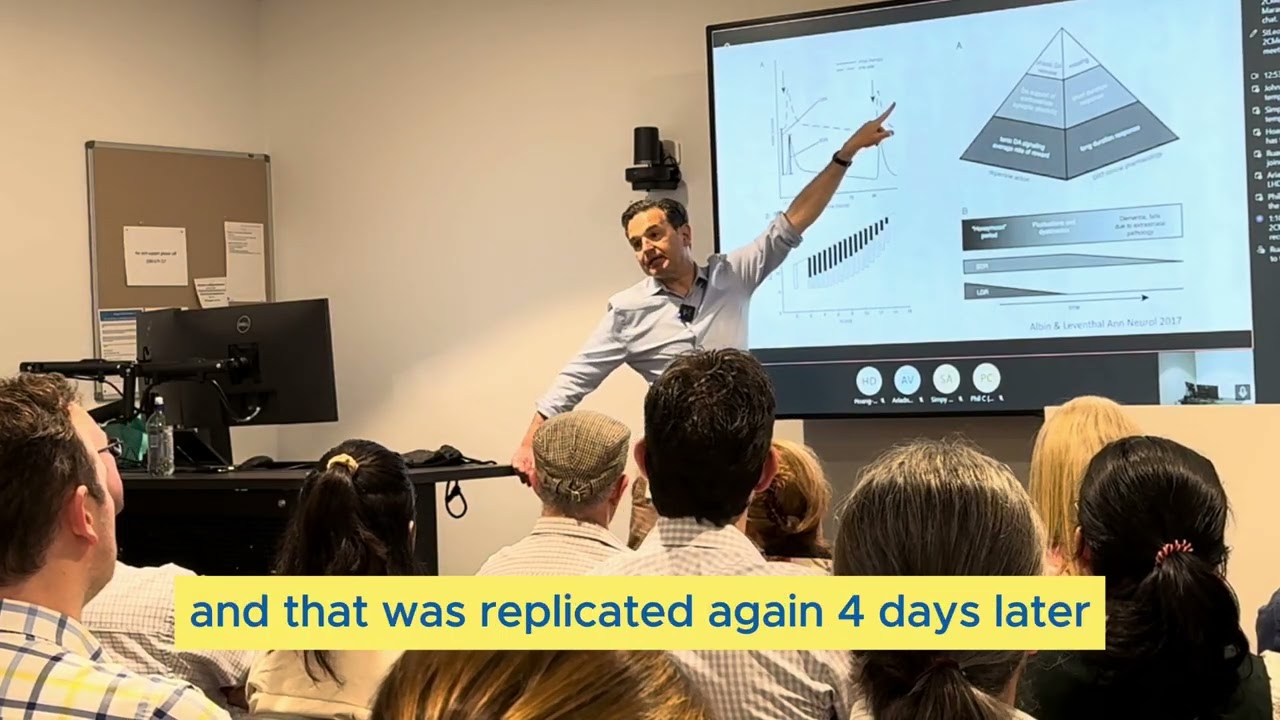
Oral levodopa is the first line of medical treatment when someone is initially diagnosed with Parkinson's disease. It is the most effective oral medication at controlling motor symptoms experienced. At a recent meeting at Royal North Shore Hospital, Dr. Paul Silberstein presented a Therapy for Parkinson's Disease Update to fellow Neurologists. He discussed all therapies available, from oral levodopa, to exericse, to deep brain stimulation. He outlined briefly the history of r
Jun 301 min read


Parkinson's Disease Facial Masking: What is Hypomimia?
What is Facial Masking? Facial masking (hypomimia) also referred to as a "flat affect", is a common Parkinson's symptom where people experience: Reduced facial expressions Less frequent blinking Diminished reactive facial expressions like smiling or frowning Appearing less animated during conversations Important: This change in facial expression does not accurately reflect the person’s emotional state. It also does not mean the person’s personality or interests have changed.
Jun 182 min read


Sleep changes in Parkinson’s Disease
Poor sleep is one of the most common — and most undertreated — symptoms of Parkinson's disease. Learn why it happens, what REM sleep disorder means, and what actually helps.
Jun 151 min read

Is managing motor symptoms enough for notable improvements in quality of life for those living with Parkinson's Disease?
The MDS publication investigating what is important for quality of life for people living with PD revealed some important considerations 👉 A key finding was that people with PD “looking good” does not necessarily mean they are feeling as good as they could be. Extensive interviews from people living with PD highlighted that when their motor symptoms are worse, this of course impacts quality of life in a negative way. But when motor symptoms are well controlled, this doesn’t
Jun 101 min read


What Really Matters for Quality of Life in Parkinson's Disease? New Research
Review of new research about what matters most for quality of life in Parkinson's Disease
May 132 min read


DBS FAQ'S
What is Deep Brain Stimulation? Deep Brain Stimulation is a procedure often performed to help manage symptoms of Parkinson’s Disease. It involves wires being implanted into deep structures in the brain by a neurosurgical team. These wires are connected to an implanted battery (like a pacemaker). How does it help Parkinson’s Disease? Deep Brain Stimulation is an effective therapy for managing Parkinson’s Disease symptoms. It works by delivering electrical currents to sel
Apr 221 min read


Introduction to Deep Brain Stimulation (DBS)
Deep Brain Stimulation (DBS) is a surgical treatment option for the management of Parkinson’s Disease. DBS is generally recommended when tablet and injectable treatments are not well tolerated or are no longer providing sufficient management of symptoms. DBS involves an implanted brain stimulation device that delivers continuous electric impulses. These impulses have similar impacts on symptoms to oral medication. Implantation is undertaken by a dedicated Neurosurgical te
Apr 131 min read


When to Consider Second-line Therapies
Brief blog on when individuals living with PD should consider second-line therapy options
Mar 301 min read


Let's outline each second-line therapy
Apomorphine Infusion: - Delivered either intermittently or continuous infusion through a small, wearable pump. This pump is connected to a needle that sits under the skin (changed daily). - Allows for rescue injections during “off” periods (when symptoms are most evident) Duodopa (Intestinal levodopa): - This delivers a levodopa gel directly into the small intestine for more consistent medication absorption compared to oral medication. - The device c
Mar 121 min read


What are the second-line therapy options?
Second-line therapy options have been shown to improve motor control, decrease unwanted symptoms such as dyskinesia, and improve overall quality of life. These therapy options include: · Apomorphine Infusion · Intestinal Levodopa Infusion (Duodopa) · Subcutaneous Levodopa Infusion (Vyalev) · Deep Brain Stimulation (DBS) Each therapy has its benefits and risks. Choice of therapy is guided by both personal preference and advice from your Neurologist. In our
Mar 61 min read


An Introduction to Second-line therapy Options for PD
Parkinsons’ disease is linked to a decrease in the brain’s ability to produce dopamine, a chemical that plays a key role in coordinating movement. This loss of chemicals leads to many of the hallmark symptoms of Parkinson’s. First-line treatment for the earlier stages of Parkinson’s Disease generally starts with exercise and oral tablets prescribed as dopamine replacement therapy. While oral medication often remains effective in maintaining symptom control for many years, thi
Mar 51 min read


How is Parkinson's Disease Diagnosed?
This is a brief blog on how Parkinson's Disease is diagnosed
Feb 241 min read


Young Onset Parkinson's Disease
What is Young Onset PD? Parkinson’s Disease is classified as young onset when symptoms occur between the ages of 21-49. This is opposed to typical/sporadic PD which, on average occurs between 50-70 years of age. Young onset Parkinson’s Disease accounts for between 10-15% of all cases of PD in Australia. What are the main differences? The main difference is of course, age of symptom onset. In some cases, progression of Parkinson’s symptoms may be slower for those with younge
Feb 121 min read
bottom of page